It is rare to attend a talk or pick up a biomedical journal or text book that does not feature illustrations made with Biorender*. For those not familiar with it, Biorender is a web-based software package that allows the rapid creation of illustrations and diagrams primarily for biomedical applications. It’s approach is to create icons representing everything from organisms, organs, tissues, cells, proteins, lipids, receptors ligands and more that can be rapidly assembled to create the desired diagram. It boasts over 50,000 icons and templates in over 30 fields of life science. It’s users love it because it creates attractive and informative illustrations in a fraction of the time compared to more generic drawing programs. Reportedly, over 2 million users use it.
I previously wrote about how Marshall McLuhan, who coined the phrase ‘The Medium is the Message’
provided insight into how new media could shape the content and was often more influential than the content itself. From this perspective, one can view the Biorenderization of biomedical talks as a new medium clearly influencing the message.
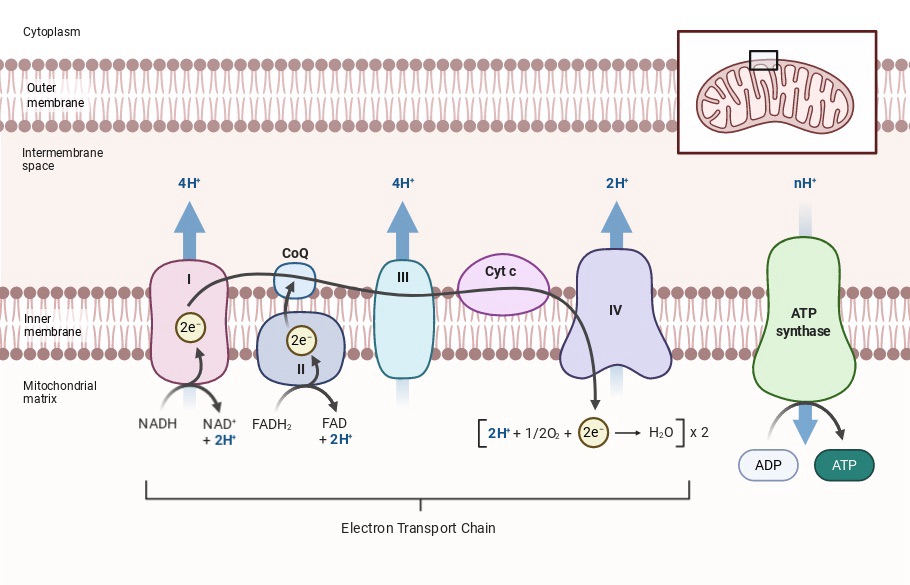
Consider the basic elements of a Biorendered illustration. Thousands of icons of everything from organisms to molecules that can be selected from a palette and placed in a diagram. Color, size, location – all connected via arrows of various style, labels all signifying processes or relationships. In essence, Biorender has created a visual language not unlike pre-literate pictographs to convey biological states. Thus an effective Biorender illustration uses a form of ‘grammar’ to organize its elements. For example, an interaction between two elements (a ligand and receptor for instance) will often use two images – the first with the two elements separated and the second with the two elements touching, often incorporating a change of some kind in the receptor. A novice might not actually know how to interpret that illustration and must be taught how to view it. Another example? Arrows are often used in the same way that they are used in chemical reactions. That is, the reactants are on the left side of the arrow and the product(s) on the right side. Thus arrows often convey transformation. Thus as with any language, facility in using Biorender requires adherence to the conventions of the grammar.
As powerful as Biorender is, it does have limitations. Its illustrations are static and do not convey the constant motion associated with living systems. Biorender icons must be sized properly in order to be seen and that often distorts the sense of scale. More importantly, biology is all about variation. As I teach our students, variation in biology is a feature not a bug and it undoubtedly enables organisms to survive in a world loaded with pathogens. Variability is hard to convey in the Biorender language. But most of all, Biorender delivers a very stylized, almost cartoonish view of the biological world. While exceedingly useful, this provides a somewhat distorted view of how biological systems are truly organized.
I would love to hear your take on Biorender and how it represents the biological world. Please comment, like, repost here or at my LinkedIn site. And if you think I can help you in getting your message out, please contact me directly here or at my website for assistance.
*Biorender is one of the more popular platforms for creating scientific illustrations and is used here as an example.
 StuartABerger.com
Leave a comment